
Where Is the Heavy Weight of the Moroccan Film Industry?
Morocco has become an increasingly attractive destination for international productions over the past two decades. Feature films, television series, projects produced for global streaming platforms, advertising campaigns, and editorial shoots continue to choose the country for its diverse landscapes, competitive costs, and efficient regulatory system.
Yet the idea of a single Moroccan “film capital” remains misleading. The country’s audiovisual ecosystem is not concentrated in one dominant city, but structured around several hubs whose functions differ according to market orientation, infrastructure, logistics, and workforce dynamics.
Marrakech, Casablanca, and Ouarzazate have long defined Morocco’s production geography. Rabat, meanwhile, is increasingly part of conversations about the industry’s future. Understanding how these cities actually operate within the filmmaking landscape offers a clearer picture than the simplified labels often used in international media.
Region 1: Marrakech – The Expanding Operational Hub
Marrakech
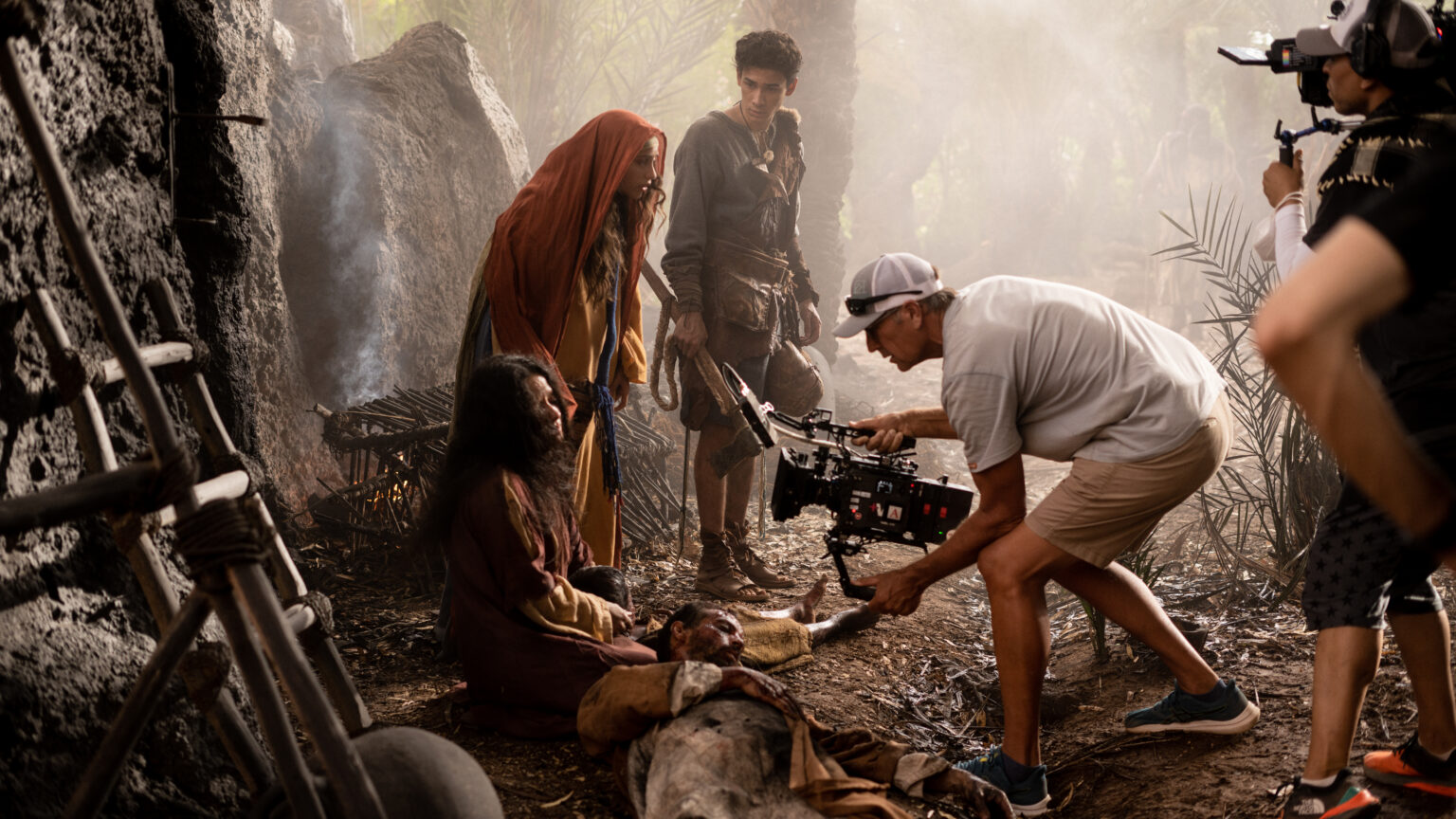
Over the past decade, Marrakech has progressively consolidated its position as the primary operational base for foreign productions working in Morocco. While internationally known for its cultural heritage and tourism appeal, its importance within the film industry is increasingly defined by logistical and infrastructural strength.
Infrastructure and Technical Growth
One of the most significant developments has been the steady expansion of the local rental and technical supply market. Marrakech today hosts a growing number of equipment rental houses and technical providers capable of servicing camera, lighting, grip, sound, and aerial production needs.
This evolution has materially altered production workflows. Foreign shoots can now source essential resources locally rather than relying exclusively on international freight and temporary import procedures.
The concentration of production service companies further reinforces Marrakech’s operational role. International productions filming across Morocco — including desert regions, mountainous terrain, coastal environments, and other cities — often coordinate logistics, accommodation, and crew management from Marrakech.
In practical terms, Marrakech has evolved from being perceived primarily as a filming location into functioning as a full-service production base.
Crew Presence and Workforce Evolution
Alongside its technical infrastructure, Marrakech has experienced a noticeable shift in workforce dynamics. The city is gradually developing a stronger base of locally resident Moroccan technicians across multiple departments.
While Casablanca continues to supply a substantial portion of specialised crew members — particularly for large-scale productions requiring experienced department heads and senior technicians — Marrakech is increasingly becoming a residential and professional base for:
-Camera assistants
-Gaffers and grips
-Production coordinator
-Art department technicians
-Post-production professionals
Crew mobility between Moroccan cities remains standard practice, particularly for larger productions. Nevertheless, the long-term shift reflects Marrakech’s expanding operational importance.
Production Environment and Geographic Advantage
Marrakech’s production appeal is reinforced by its geographic positioning. A wide range of filming environments — urban settings, rural landscapes, desert locations, and mountainous terrain — are accessible within manageable travel times.
This flexibility allows productions to centralise accommodation and operations while maintaining significant visual diversity. The ecosystem of casting resources, production offices, set suppliers, transport providers, and hospitality partners has matured substantially, reinforcing Marrakech’s role as a central operational hub.
Region 2: Casablanca–Rabat – Domestic and Institutional Production Core
Casablanca
If Marrakech represents the operational centre for international projects, Casablanca functions as the backbone of Morocco’s domestic and commercial production sector.
As the country’s economic and commercial capital, Casablanca sustains a continuous flow of locally driven production activity.
Domestic Production and Commercial Activity
Moroccan feature films, television productions, advertising campaigns, branded content, and corporate media projects form the foundation of Casablanca’s production landscape.
The city hosts a dense concentration of:
-Moroccan production companies
-Creative agencies
-Commercial clients
-Broadcasters
Casablanca’s production profile is therefore closely tied to Morocco’s domestic audiovisual market and commercial content sector.
Studios and Controlled Environments
While not defined by large-scale studio complexes, Casablanca does host several studio facilities and hybrid production spaces. These controlled environments primarily support advertising shoots, interviews, television programming, and commercial productions requiring indoor setups.
In addition, the city maintains a well-established equipment rental sector serving camera, lighting, grip, and sound requirements — further reinforcing its role as a stable domestic production centre.
Rabat
Rabat complements Casablanca’s commercial strength with institutional weight.
As Morocco’s administrative capital, Rabat hosts key regulatory bodies, public institutions, and national broadcasters, making it the country’s institutional centre for television and public media production.
Institutional and Broadcast Activity
Much of Rabat’s production activity is linked to:
-Public broadcasters
-Government institutions
-National media initiatives
-Cultural programming
Its importance lies less in volume of foreign shoots and more in governance, regulation, and public-sector audiovisual output.
Emerging Studio Ambitions
In recent years, Rabat has been associated with announced large-scale studio development projects aimed at expanding Morocco’s controlled-environment production capacity.
As with major infrastructure initiatives, the full impact of these projects will become clearer as operational phases are realised. For now, Rabat remains primarily defined by broadcast, institutional, and administrative influence within the national ecosystem.
Region 3: Ouarzazate – Specialised Desert Production Zone
Ouarzazate
Ouarzazate occupies a singular and globally recognised position within Morocco’s production landscape. Its cinematic significance remains disproportionate to its size.
For decades, the region has served as the backdrop for major international productions requiring expansive landscapes, historical environments, and large-scale set pieces.
Backlots and Open-Air Studios
A defining feature of Ouarzazate’s appeal lies in its open-air studio backlots and existing set environments. These spaces provide productions with ready-to-use architectural structures and adaptable cinematic environments.
The desert terrain and distinctive light conditions continue to attract epic narratives and spectacle-driven projects.
Blockbusters and Large-Scale Productions
Large-scale productions gravitate toward Ouarzazate for sequences requiring:
-Monumental landscapes
-Battle scenes
-Desert expeditions
-Historically evocative settings
The combination of natural scenery and constructed backlot environments delivers production value that is difficult to replicate in conventional studio settings.
Operational Dynamics
Rabat complements Casablanca’s commercial strength with institutional weight.
As Morocco’s administrative capital, Rabat hosts key regulatory bodies, public institutions, and national broadcasters, making it the country’s institutional centre for television and public media production.
The weight of the Moroccan film industry does not reside in a single city. Instead, it is distributed across three interdependent production regions:
-Marrakech as the operational and logistical hub for international shoots
-Casablanca–Rabat as the domestic, commercial, and institutional core
-Ouarzazate as the specialised desert production zone for large-scale international projects
Together, these regions form a multi-centred ecosystem shaped by infrastructure, workforce mobility, geography, and market dynamics.
Understanding this distributed structure provides a more accurate picture of how Morocco’s film industry truly operates.




 Français
  English